BLOG
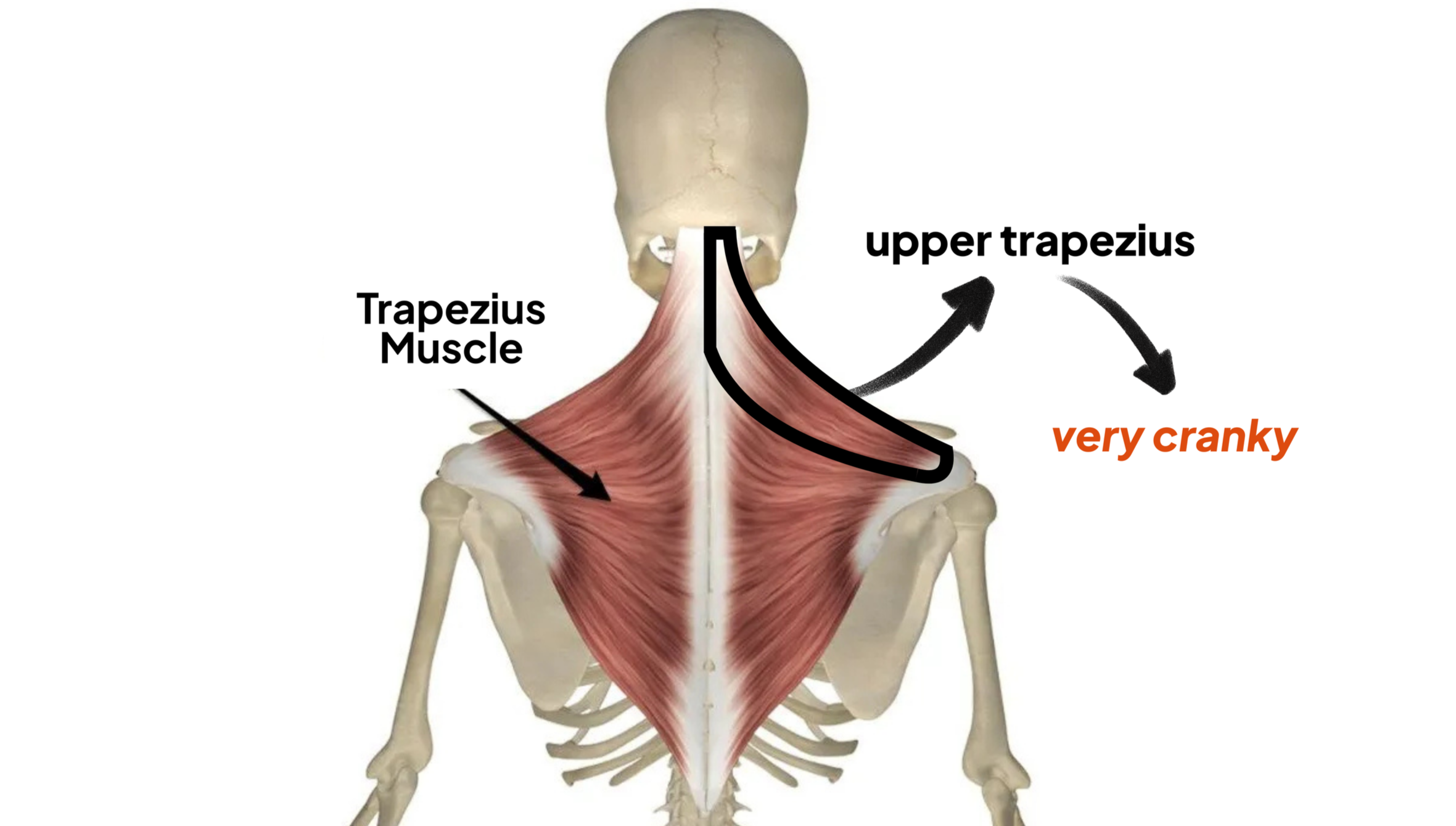
Tight & painful upper traps?
Here's the problem: most upper traps are TIGHT AND CRANKY because, frankly, they're overworking. Why are they overworking, you ask? Great question. Usually, this happens because your neck and scapular stabilizer muscles are either inhibited (firing much less than they should be), OR they lack the motor control to coordinate with other muscles during complex, multi-joint movements. Think of it like this: your stabilizer muscles can show up and do their job just fine when working alone in a quiet room, but the second they need to collab on a group project, they freeze up and stop contributing. When your stabilizers can't pull their weight during multi-joint, coordinated efforts, your upper traps, ever the overachievers, try to DO IT ALL. This is why just stretching or “releasing” your traps rarely provides lasting relief. You're essentially telling an overworked employee to take a break without training the rest of the team to actually pitch in and work together. The solution? Stop treating the symptom and start addressing the root cause by resetting the whole system.

Femoral nerve tension: The Hidden Culprit Behind Your Stubbornly Tight Hip Flexors
If your hip flexors are SO TIGHT and they STUBBORNLY REFUSE to lengthen despite religiously stretching them, trust me - you are NOT alone. After working with artistic athletes for over a decade, I keep seeing one hidden issue that masquerades as tight hip flexors: femoral nerve tension. Understanding how to self-test for this limitation and safely address it can be the game-changer you need to finally break free from that frustratingly unproductive stretch-and-repeat cycle.
POTS-Friendly strategies to track recovery
If you have POTS or other types of dysautonomia, you've probably noticed that recovery tracking methods like HRV and resting heart rate don't always work for you. Whether you're trying to pace your energy to avoid crashes or optimize athletic performance, reliable recovery data is crucial. But with dysautonomia, your autonomic nervous system is already dysregulated…creating chaotic readings that don't always match how you actually feel.
Luckily, there are recovery tracking options that bypass autonomic dysfunction entirely: grip strength testing and the CNS tap test.